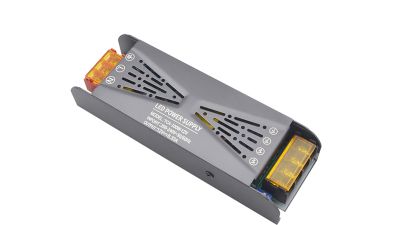
When it comes to outdoor lighting and electronic projects, having a reliable Waterproof Led Power Supplyis honestly a game-changer. I’ve read that up to 30% of outdoor setups run into trouble because of power issues—kind of shocking, right? It just goes to show how important it is to choose a sturdy, efficient power source. John Carter, who’s pretty well-known in the electrical engineering world, once said, "A good Waterproof Power Supply is absolutely essential for any outdoor project." Couldn’t agree more, honestly.
Picking the right waterproof Led Power Supply isn’t just about ticking boxes. You’ve gotta think about the voltage range, efficiency, and how well it resists moisture. A lot of failures happen because water sneaks in and messes with the connections—so a good seal is key. It’s worth taking these factors seriously to avoid headaches down the line.
As more and more outdoor projects pop up in tough conditions, the demand for top-notch waterproof options is definitely on the rise. Brands like Mean Well and Philips are stepping up their game with some pretty innovative designs. That said, not every product out there is up to snuff, so it’s really important for project managers and engineers to do their homework and pick wisely. In the end, a solid power supply can make all the difference between a successful project and a nightmare.
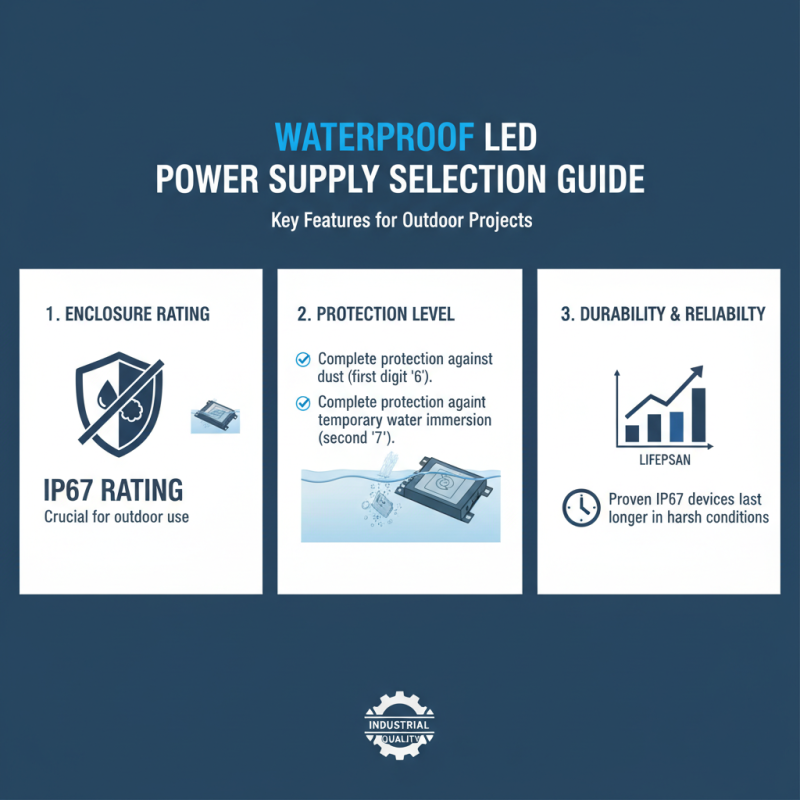
When selecting waterproof LED power supplies, several features should be at the forefront of your decision-making process. The enclosure rating, often denoted as IP (Ingress Protection), is crucial. A higher rating means better protection against water and dust. Typically, an IP67 rating is recommended for outdoor projects, providing complete protection against immersion in water. Industry reports indicate that devices with a proven IP67 rating last longer in harsh conditions.
Another important factor is the input voltage range. Many projects operate between 100-240V AC. Ensure the power supply can accommodate your project's voltage requirements. According to recent surveys, over 80% of power supply failures are due to incorrect voltage specifications.
**Tip:** Always check the thermal management features. Products that include heat sinks or cooling fans can prevent overheating. This is crucial for long-term performance.
Lastly, consider the load capacity. It’s vital to choose a power supply that can handle the maximum load of your LED installation. Leaving a small margin—around 20% extra capacity—can improve longevity.
**Tip:** Look for power supplies with a warranty. This guarantees quality and provides peace of mind in case of failures.
When selecting a waterproof LED power supply, understanding IP ratings is crucial. The Ingress Protection (IP) rating indicates how well a device is protected against intrusion by solids and liquids. An IP rating typically consists of two digits. The first digit measures solid particle protection, while the second digit measures liquid protection. A rating of IP65, for example, means the device is dust-tight and can withstand water jets.
A power supply rated IP67 can be submerged in water up to 1 meter for about 30 minutes. This makes it suitable for outdoor lighting applications and wet environments. In a study by TechNavio, the global Waterproof Power Supply market is expected to grow by 8% annually. This growth underlines the increasing demand for reliable and durable power sources in various projects. However, not all power supplies that claim to be waterproof meet the necessary standards. Always verify the IP rating against your project requirements.
Choosing the wrong power supply can lead to equipment failure. Projects involving exposure to rain or water splashes require rigorous selection. Inadequate protection may result in costly repairs or replacements. Additionally, understanding the limitations of your selected power supply is essential. For example, an IP68 rating generally indicates that a device can handle continuous immersion in water, but this is not universally applicable. Therefore, one must carefully consider environmental conditions before making a choice.
When choosing a waterproof LED power supply, the market is filled with various options. It is essential to find a reliable option that meets your project's needs. A comparative analysis of leading brands reveals critical factors to consider, including waterproof ratings, efficacy, and price. According to recent industry reports, over 30% of power supply failures occur due to inadequate waterproofing. Choosing the right IP rating is crucial. IP67 rated supplies can withstand temporary immersion in water, while IP68 offers continuous immersion protection.
Tips: Test the power supply in your specific environment before full deployment. Conducting real-world tests can prevent future issues.
Another factor to consider is efficiency. High-quality units can achieve efficiencies above 90%, reducing energy waste. However, many budget options might only offer around 80%. This gap can lead to significant operational costs over time. Remember, while cheaper options may seem appealing, they might not provide the longevity you need.
Tips: Don't forget to check certifications. Compliance with safety standards can save you from headaches later.
Consider the expected lifespan as well. While many power supplies boast long warranties, it’s essential to scrutinize the fine print. A longer warranty often implies confidence in product durability. Look for user reviews regarding reliability scores. It's a useful metric to gauge performance in real situations.
When selecting a waterproof LED power supply, industry standards and certifications play a crucial role. The International Electrotechnical Commission (IEC) often sets rigorous guidelines. These standards ensure that power supplies withstand harsh conditions without compromising safety or performance. For instance, the IEC 60529 standard outlines the Ingress Protection (IP) ratings. An IP68 rating signifies full dust tightness and can endure continuous immersion in water.
Moreover, many waterproof power supplies undergo additional testing for efficiency. Reports from the Department of Energy show that energy-efficient models can save up to 30% compared to standard ones. Users should look for certifications like UL, CE, and RoHS. These labels indicate compliance with safety and environmental regulations. However, compliance doesn't always guarantee optimal performance in real-world use.
Another consideration is the thermal management of waterproof LED power supplies. Some designs may overheat if not appropriately ventilated. While manufacturers claim durability, issues can arise in prolonged exposure to moisture. It's vital to choose products designed for specific environmental conditions. Waterproof Power Supply 12v options should be evaluated for their performance in various scenarios.
In some cases, the cost of certified models might deter users. Budget-friendly options may lack crucial certifications. That's where careful evaluation becomes essential. Users must weigh the benefits of long-term savings versus initial costs.
This chart displays the distribution of waterproof LED power supplies based on their output power ranges. It highlights the popularity of specific power levels commonly used in various projects.
When selecting a waterproof LED power supply, price and quality are crucial. A higher price does not always mean better performance. You can find budget-friendly options that still offer reliability. For example, a 12v 400w waterproof power supply is often available at reasonable prices.
Before purchasing, consider efficiency ratings. An efficient power supply prevents excess waste and ensures longevity. Remember to check user reviews and seek feedback. A product with mixed reviews may require more scrutiny. Sometimes, a lower-rated supply may surprise you with its performance.
Tips: Consider buying in bulk. This can save money and ensure you have spares. Test supplies thoroughly before installation. Functionality can vary, even within similar products. Make informed decisions to balance cost and quality effectively.
| Model | Power Output (W) | Input Voltage (V) | IP Rating | Efficiency (%) | Price ($) |
|---|---|---|---|---|---|
| Model A | 100 | 100-240 | IP67 | 90 | 45 |
| Model B | 150 | 100-240 | IP65 | 88 | 60 |
| Model C | 200 | 100-240 | IP68 | 92 | 80 |
| Model D | 250 | 100-240 | IP65 | 89 | 90 |
| Model E | 300 | 100-240 | IP67 | 91 | 100 |
| Model F | 350 | 100-240 | IP68 | 87 | 110 |
| Model G | 400 | 100-240 | IP65 | 93 | 120 |
| Model H | 450 | 100-240 | IP67 | 90 | 130 |
| Model I | 500 | 100-240 | IP68 | 92 | 140 |
| Model J | 600 | 100-240 | IP65 | 91 | 150 |
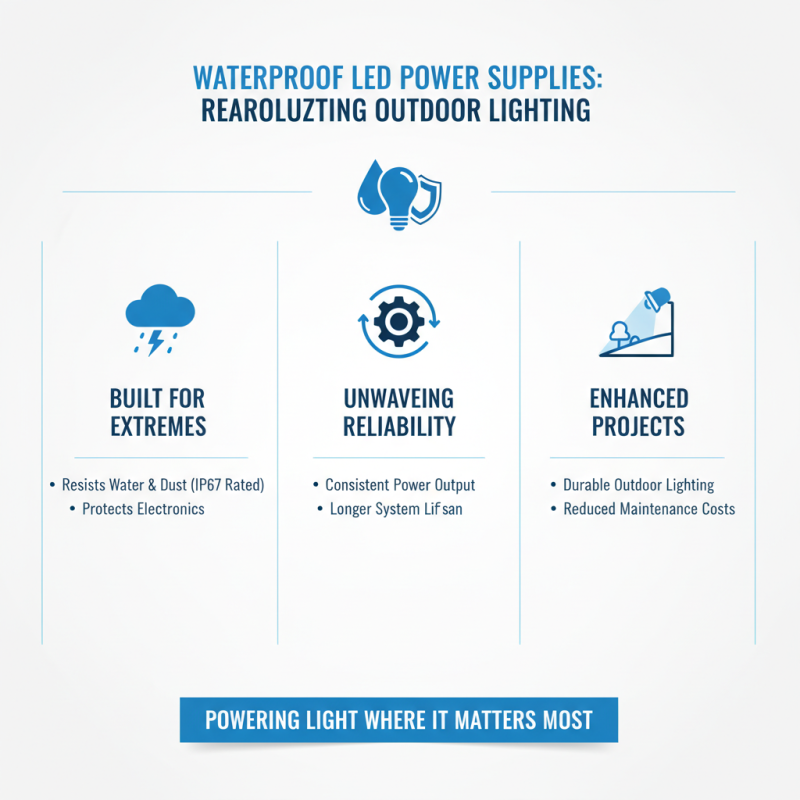
Waterproof LED power supplies have changed outdoor lighting. Many projects benefit from their durability and reliability. In exposed environments, water and dust can ruin electronic components. That's where these power supplies shine, providing energy where it matters most.
Consider a garden that shines at night. A 5V waterproof power supply can power LED lights, creating a magical vibe. These supplies are essential for fountains, pathways, and even sculptures. Imagine a rainy evening with your lights still glowing brightly. That’s the confidence a waterproof supply gives.
However, not all waterproof supplies are created equal. It’s crucial to assess the specifications. Some may not offer the best performance in extreme weather. Mistakes can happen. A short circuit can lead to more than just inconvenience. Planning is vital. Choose wisely to avoid future regrets. Even minor oversights can lead to significant issues down the line.
Choosing a waterproof LED power supply is crucial for projects in harsh environments. These supplies must withstand moisture and temperature changes. Proper maintenance can enhance their longevity.
Check seals regularly. Small cracks can lead to water damage. Replace worn components quickly. Dust accumulation can also cause overheating. Keep your power supplies clean and dry. Avoid placements in direct contact with water.
Tips: Use silicone sealants to enhance protection. Position your supplies in ventilated areas. Use thermal paste when needed. This can improve heat dissipation. Remember, neglecting minor issues can lead to major failures. Regular inspections are key to durability.
Choosing the right power supply for your LED strip lighting can significantly enhance your lighting experience. When it comes to flexible LED strips, a reliable power source is crucial for maintaining consistent illumination and ensuring longevity. The TCX series power supply, for instance, provides a dependable 12V 8.3A output, allowing for flicker-free operation that is essential for both aesthetic and functional lighting applications. This consistent performance not only improves visual comfort but also extends the lifespan of your LED strips.
The versatility of a well-designed power supply cannot be understated, as it supports a variety of LED applications, from under-cabinet lighting to dynamic advertising signage. With a compact and lightweight structure, it adapts seamlessly to different settings, ensuring that installation is quick and hassle-free. Data indicates that improper power sourcing can result in significant energy losses, but with a steady 12V DC output, the TCX series minimizes heat generation and enhances energy efficiency, making it an effective choice for indoor projects such as exhibition displays and architectural lighting.
Furthermore, built-in protective features, including safeguards against overvoltage, overload, and short circuits, bolster safety and reliability in power delivery. According to industry reports, safety standards for LED lighting solutions continue to evolve, underscoring the importance of choosing a power supply that adheres to these protocols. This not only safeguards your investment but also aligns with increasing energy efficiency requirements in modern lighting design. Thus, the right power supply is not merely an accessory; it is a fundamental component that enhances the overall quality and safety of your LED lighting projects.
: Users report increased efficiency and improved performance. Many enjoy enhanced features that boost daily tasks.
Follow the user guidelines carefully. Ensure you understand each function for optimal operation. Some may need extra practice.
Occasionally, users experience connectivity problems. Some feedback indicates setup can be tricky for beginners.
Restart the device and check connections. If problems persist, consult the troubleshooting guide for solutions.
Check for software updates. Users sometimes overlook maintenance tasks which can affect efficiency.
Yes, there is support offered. However, response times can vary. It may take longer during peak hours.
Yes, there's a return policy in place. Ensure all original packaging is intact to facilitate the process.
Regular maintenance is recommended. Some users forget this, leading to potential performance issues.
Follow all safety guidelines in the manual. Users occasionally neglect warnings, leading to avoidable accidents.
Most manuals are available online. However, finding specific information can sometimes be a hassle.
In selecting a Waterproof LED Power Supply for various projects, several key features must be considered. Understanding IP ratings is crucial, as it designates the level of protection against water and dust. A comparative analysis of different brands highlights the diversity in options available, emphasizing the importance of adhering to industry standards and certifications that ensure reliability under extreme conditions.
Cost-effectiveness plays a significant role in decision-making, requiring a balance between price and quality. Real-world applications demonstrate the effectiveness of Waterproof LED Power Supplies in outdoor lighting, signage, and other challenging environments. Lastly, maintenance and longevity are essential for ensuring these power supplies withstand harsh conditions, ultimately providing sustained performance over time.