As the world keeps pushing for more energy-efficient solutions, the importance of LED power supplies is only growing. Have you seen that recent market report from Allied Market Research? It predicts the global Led Power Supply market will hit around $12.8 billion by 2025! That growth is fueled by leaps in LED tech and the rising popularity of smart lighting systems. But here’s the thing—not all power supplies are built the same. If you’re shopping around, you’ve gotta sort through a bunch of options, weighing things like performance, reliability, and whether they’re worth the cost.
Big names like Mean Well Enterprises and Inventronics often top the charts in industry reports. Their products tend to be solid—reliable, efficient, and well-performing. But here’s the catch: prices can vary a lot, which can leave you scratching your head trying to figure out if you're really getting good value. And if you choose a power supply that doesn’t match your actual needs, it could underperform or even damage your equipment—that’s a risk you definitely don’t want to take.
Also, with manufacturers constantly pushing out new innovations, staying in the loop is super important. No single supplier has it all covered. That’s why it pays off to explore different LED power supplies to find the perfect fit for your specific situation. Industry reviews and user feedback can give you a lot of helpful insights, but honestly, some uncertainties still linger. Getting a good grasp of this landscape is key if you want to make smart investments in the future of lighting tech.

Overview of LED Power Supply Market Trends for 2026
As we look ahead to 2026, the LED power supply market shows significant potential for growth. Consumer demand continues to rise, driven by an increasing preference for energy-efficient lighting solutions. Key technology trends include advancements in smart power management and the integration of IoT. Companies are exploring how to enhance performance while minimizing energy consumption.
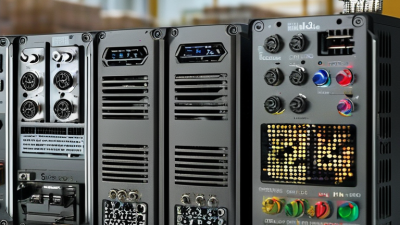
One of the notable trends is the increasing variety of LED power supplies available. The need for specific applications has led manufacturers to diversify their offerings, including options like 5V led pixel led screen power supply. This diversity allows industries to tailor solutions to their unique lighting requirements. However, quality control remains a critical challenge. Deficiencies in production can lead to reliability issues, making it essential for buyers to focus on trusted suppliers.
Industry experts predict that sustainability will be a key driver in 2026. Manufacturers are reviewing materials and processes to reduce their environmental impact. While this is promising, balancing cost and sustainability can be tricky. Buyers must stay informed about innovations that prioritize both efficiency and eco-friendliness. Additionally, as new regulations emerge, suppliers must adapt quickly to remain competitive in the evolving market landscape.
Key Factors to Consider When Choosing LED Power Supplies
When selecting LED power supplies, buyers must consider several key factors. Efficiency is crucial. A power supply with high efficiency reduces energy waste. This can lead to lower electricity bills and a smaller carbon footprint. Look for efficiencies above 85%.
The output voltage also matters. Ensure it matches the requirements of the LED lights. Mismatched voltages can damage the lights or reduce their lifespan. Moreover, thermal management is essential. Excess heat can decrease efficiency and reliability. A good design should dissipate heat effectively.
Lastly, durability is vital. Check the build quality and materials used. This impacts longevity and performance in demanding environments. Some power supplies may look appealing but could fail under stress. Always prioritize reliable, well-tested options.
2026 Top LED Power Supply Options for Global Buyers
| Power Supply Type | Input Voltage Range (V) | Output Wattage (W) | Efficiency (%) | Operating Temperature (°C) | Form Factor |
| AC-Dc Power Supply
| 90-265 | 150 | 85 | -20 to +60 | Open Frame |
| LED Driver | 100-240 | 75 | 90 | -30 to +70 | Enclosed |
| Constant Voltage Supply | 85-265 | 60 | 87 | 0 to +50 | Desktop |
| Constant Current Driver | 90-240 | 40 | 92 | -10 to +60 | Compact |
| Dimmable Power Supply | 100-277 | 100 | 89 | -20 to +65 | Modular |
Top Manufacturers of LED Power Supplies in 2026
The Led Power Supply industry continues to evolve rapidly. In 2026, global buyers face a vast array of options. Several manufacturers lead the market, but competition drives innovation. According to recent reports, energy efficiency is a top priority. Many power supplies now boast efficiencies exceeding 90%. This statistic highlights the importance of technological advancement.
Top manufacturers invest heavily in research. They aim to enhance product reliability and lifespan. Notably, failure rates in poorly-designed LED power supplies can reach 20%. Buyers should prioritize brands with robust quality control. Beyond efficiency, compliance with safety standards remains essential. Manufacturers must adhere to international regulations to ensure consumer confidence.
The increasing demand for LED lighting fuels market growth. Projections estimate a compound annual growth rate of 7% from 2022 to 2027. Yet, not all power supplies on the market meet desired standards. Buyers must do their homework. Understanding specifications can prevent costly mistakes. A well-chosen LED power supply not only improves performance but also reduces energy costs over time.
Comparative Analysis of Power Supply Technologies for LEDs
As the demand for LED technology grows, power supply options are becoming increasingly important. Recent industry reports indicate that the global LED driver market is expected to reach approximately $15 billion by 2026, reflecting a robust annual growth rate of 20%. This growth is driven by advancements in power supply technologies that enhance energy efficiency and reduce waste.
One notable trend is the transition from linear to switching power supplies. Switching power supplies offer better performance by adapting to varying loads. They can achieve efficiencies of up to 95%, significantly reducing operational costs. Conversely, linear supplies tend to be less efficient, often wasting energy as heat. However, they are simpler and may appeal to certain applications requiring less complexity. This shift presents both opportunities and challenges; manufacturers must balance efficiency with design simplicity.
Another emerging technology is the integration of smart controls in LED power supplies. Smart features enable real-time monitoring and energy optimization. A study found that utilizing smart power supplies could potentially cut energy consumption by 30% in commercial applications. While these innovations provide compelling benefits, they also introduce complexities in installation and maintenance. Stakeholders should carefully consider these factors when choosing between traditional and smart power supply solutions.
The Importance of Energy Efficiency in LED Power Supply Selection
Energy efficiency plays a crucial role in selecting the right LED power supply. As more consumers focus on sustainability, the choice of power supply can impact both the environment and operational costs. Efficient Led Lighting Power Supply units convert more electrical energy into usable light, reducing waste. This minimization of energy loss directly correlates with lower electricity bills and a smaller carbon footprint.
Choosing an energy-efficient power supply is not always straightforward. Buyers must consider different factors such as voltage, wattage, and the overall design of the LED lighting power supply. Not all power supplies are made equal; some may seem efficient but can fail under certain conditions. Testing and certification levels vary, raising the question of reliability. Understanding the specifications and the manufacturing process can enhance informed decision-making.
The market also presents challenges in deciphering which options meet true energy efficiency standards. Many products advertise energy-saving benefits, but their actual performance may differ. Buyers should seek out information from credible sources and conduct thorough research. This consideration ensures the selected LED lighting power supply meets energy efficiency goals, leading to long-term benefits. Embracing this focus not only supports individual consumers but also contributes to a sustainable future.
2026 Top LED Power Supply Options: Energy Efficiency Comparison
This bar chart illustrates the energy efficiency ratings of different LED power supply models in terms of lumens per watt (lm/W). Selecting a power supply with higher energy efficiency not only helps in reducing energy consumption but also contributes to sustainability goals in the LED lighting industry.
Global Regulations and Standards Affecting LED Power Supplies
Global regulations significantly influence the design and functionality of Power Supply For Led systems. In recent years, standards such as the IEC 62368-1 and the UL 8750 have been critical in ensuring safety and performance. Reports show that compliance with these standards can enhance product reliability while also meeting energy efficiency goals. For instance, the Energy Star certification has become a benchmark for assessing the efficiency of lighting products, including LED power supplies.
These regulations vary by region. In Europe, the EcoDesign Directive sets strict energy efficiency limits for power supplies. As per a 2021 study, around 90% of power supply units for LEDs failed to meet these new efficiency benchmarks. This shortfall indicates a need for manufacturers to innovate and adapt. In contrast, North America emphasizes safety standards, which can lead to increased costs and longer development cycles for compliant products.
Market analysis suggests that as regulations tighten, manufacturers are challenged to balance cost and compliance. This balance can create tension between quality and pricing. Stakeholders must embrace these changes, as failure to comply could result in significant market backlash. Reflecting on these challenges, the industry must consider how to innovate while adhering to evolving regulations. Ultimately, the future of power supply for LED technology hinges on this delicate balance.
Future Innovations in LED Power Supply Solutions for Buyers
As the LED market evolves, innovations in power supply solutions are becoming increasingly vital. By 2026, experts predict a surge in demand for energy-efficient power supplies. According to a recent report from the International Energy Agency (IEA), the global LED lighting market is set to reach $100 billion by 2025. This boom emphasizes the need for technologically advanced power supply options that can enhance performance while reducing energy consumption.
Future LED power supplies must address key challenges, such as compatibility with various applications. With more devices relying on LED technology, manufacturers are exploring smart power supplies that adapt to usage conditions. Reports suggest that smart solutions could improve energy efficiency by up to 30%. Despite this potential, many companies struggle to integrate these innovations, which raises concerns about user experience and application variability.
Investing in research and development will be crucial. Industry players must explore sustainable materials and enhance reliability. A recent survey highlighted that 67% of buyers prioritize durability in power supplies. However, what's concerning is that less than 50% of suppliers currently meet these durability expectations. This gap indicates a need for deeper collaboration between manufacturers and designers to ensure that future power supplies are not only innovative but also reliable in real-world applications.
FAQS
: The growth is driven by advancements in power supply technologies and rising demand for LED technology.
Switching supplies are more efficient, achieving up to 95% efficiency. Linear supplies waste energy as heat but are simpler.
Smart controls allow real-time monitoring and energy optimization, potentially reducing consumption by 30%.
Regulations influence design, safety, and efficiency, pushing manufacturers to innovate and comply with energy standards.
Around 90% of units failed to meet strict efficiency limits, highlighting a need for manufacturers to adapt.
Many struggle with installation and maintenance complexities, affecting user experience and application variability.
Compatibility with various applications and durability are critical. Many suppliers currently fall short in durability.
R&D is crucial for exploring sustainable materials and enhancing reliability in power supplies.
A recent survey indicated that 67% of buyers regard durability as a top priority.
Less than 50% of suppliers meet durability expectations, demonstrating a gap that needs addressing.
Conclusion
The article "2026 Top Led Power Supply Options for Global Buyers" provides a comprehensive overview of the LED power supply market trends anticipated for 2026. It highlights key factors that buyers should consider when selecting LED power supplies, emphasizing the importance of energy efficiency and compliance with global regulations and standards. The comparative analysis of different power supply technologies offers insights into their effectiveness and suitability for various applications, ensuring that buyers are well-informed in their decisions. Furthermore, the article discusses the role of top manufacturers in shaping the industry and previews future innovations that promise to enhance the performance and sustainability of LED power supply solutions. Overall, this guide equips global buyers with essential knowledge to navigate the evolving landscape of LED power supplies.