Choosing the right Power Supply is honestly a pretty big deal when you're working on any electronic project. A decent power supply can make all the difference—helping your devices run smoothly and without hiccups. Skipping over this part can sometimes lead to performance problems later on, and nobody wants that, right?
When you're looking at options, think about what you actually need. For instance, there's this 12 Power Supply 1000w Rainproof Power Supply. It’s pretty solid—durable and reliable. But honestly, not every project needs something this mighty. Sometimes, a smaller or less powerful one will do just fine.
I get it, though—you walk into the market, and suddenly, there are a million options, brands, specs… It’s easy to feel overwhelmed. Some brands might boast about being top-notch, but not all will actually fit your needs. The trick is to really think about what you’re aiming for and zero in on the specs that matter most. Trust me, a little reflection here can save you a ton of trouble down the road.
Understanding the Basics of Power Supplies
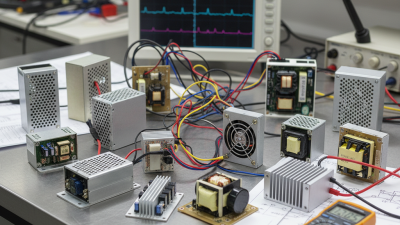
Power supplies are crucial for any electronic device. They convert the electrical energy from a source to a usable form. Understanding how they work can help you pick the right one.
There are different types of power supplies. Some are more efficient than others. For example, linear power supplies are simple but can be bulky. Switching power supplies are more compact and versatile. They can be quite helpful in various applications. However, they can produce electrical noise, which might affect sensitive devices.
When selecting a power supply, it's important to consider the wattage. You need a power supply that can handle your device's demands. If unsure, it's easy to underestimate your needs. You might end up with a unit that’s insufficient. Always check the voltage and current ratings, too. This will save you from future complications. Make sure to consider the environment as well. An outdoor or industrial setting may require specialized equipment.
Types of Power Supplies: ATX, SFX, and More
When choosing a power supply, understanding the types available is crucial. ATX power supplies are the most common. They fit a variety of cases and support standard components. If space is a concern, the SFX power supply might be the better choice. It is smaller but still capable of providing sufficient power for many setups. Each type has its own strengths and weaknesses that need careful consideration.
Beyond size and compatibility, other features matter too. For example, some users may require a Rainproof Power Supply for outdoor or unique environments. This can prevent damage from moisture and ensure reliable performance.
There are also semi-modular and fully modular options. These allow for better cable management, but they can be more expensive. Choosing the right type requires balancing budget and needs carefully. It is essential to weigh the importance of features against the cost. Many overlook this and end up with a power supply that does not fit their situation well.
Key Specifications: Voltage, Current, and Wattage Explained
Choosing the right power supply is essential for any project. Understanding key specifications like voltage, current, and wattage is crucial. Voltage refers to the potential force driving electric current through a circuit. Different devices operate at various voltage levels. A mismatch can cause failure or even damage.
Current, measured in amperes, indicates the flow of electricity. Each device has a specific current requirement. If the power supply can't provide enough current, the device may underperform. Conversely, too much current can lead to overheating. Always check the device's requirements to avoid complications.
Wattage combines voltage and current to represent total power usage. It’s a vital figure. Underestimating wattage can lead to insufficient power. Overestimating can waste energy. Many enthusiasts overlook these specs, leading to regrets. It's tempting to go for a high wattage supply, but it’s not always necessary. Always reflect on your actual needs to make the best choice.
Assessing Your Power Needs: Calculating Total Wattage
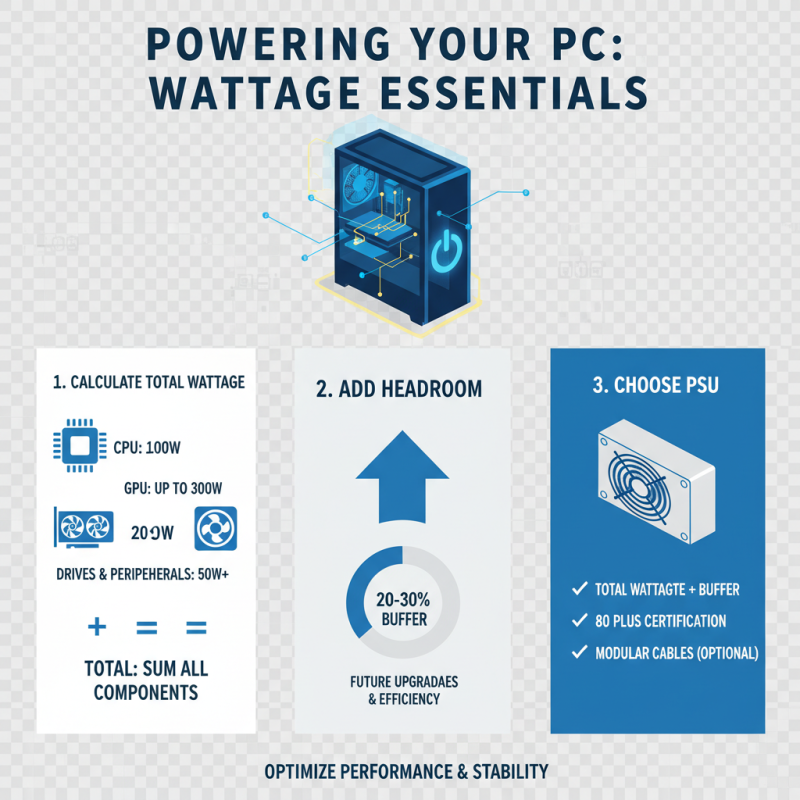
Choosing the right Power Supply can greatly impact your system's performance. Calculating total wattage is essential. First, add up the wattage of all components. This includes the CPU, GPU, and drives. For instance, a high-end graphics card can draw up to 300 watts. The CPU typically requires another 100 watts. Additionally, don't forget peripherals like fans and USB devices. They, too, consume power.
Tips: Consider leaving a buffer. Aim for a power supply that can deliver 20% more wattage than needed. This ensures stability during peak loads. Moreover, it also extends the lifespan of your power supply. Many experts agree that undersizing a power supply can lead to system instability. In fact, reports show that nearly 35% of power supply issues stem from inadequate wattage.
When assessing wattage requirements, be precise. Mistakes can lead to overpaying for unused capacity or compromising on performance. Balancing efficiency and cost is vital. Consequently, choosing the ideal power supply isn't just about numbers; it's about matching your specific needs and considering future upgrades.
Compatibility Considerations: Motherboard and Peripheral Requirements
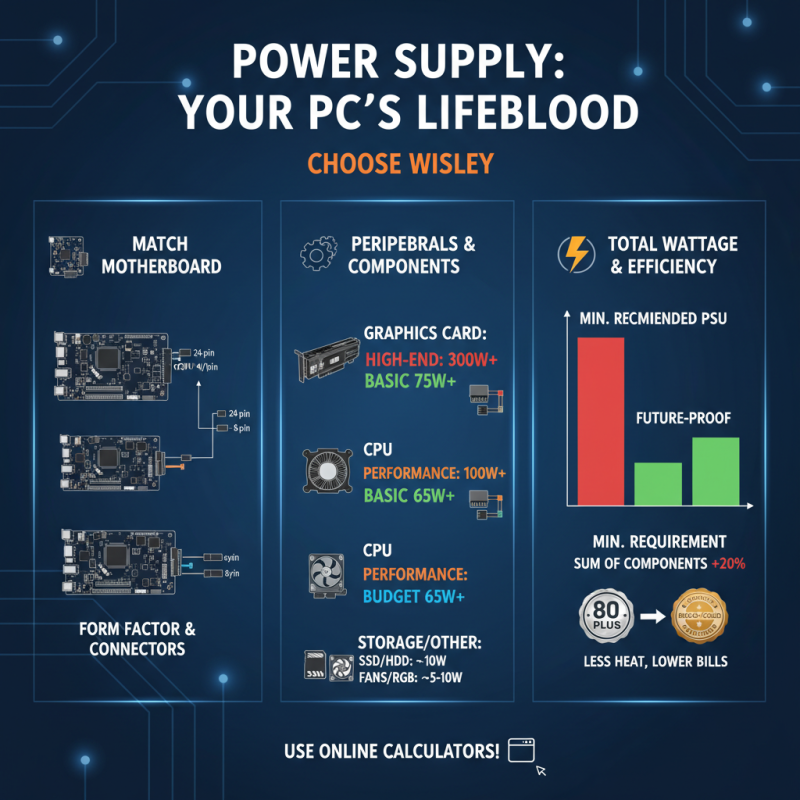
Choosing the right power supply is crucial. It should match your motherboard and peripherals. Different components have varied power requirements. For instance, a high-end graphics card needs more power than basic models.
Check the motherboard specifications. Ensure the power supply has the correct connectors. Some boards require special connections. Failing to connect properly can lead to system instability. Don't overlook this detail.
Tips: Always compare the wattage. Go slightly higher for future upgrades. Using a power supply that’s underpowered can cause performance issues. It’s tempting to save money, but this can backfire.
Additionally, verify the modularity of the power supply. Fully modular supplies allow for better cable management. This can improve airflow in your case. Good airflow is essential for cooling. Don't ignore the impact of poor airflow on performance.
Efficiency Ratings: 80 PLUS and What They Mean for You
When selecting a power supply, efficiency ratings play a key role. The 80 PLUS certification is vital. It indicates how efficiently a power supply converts AC to DC power. A unit with this certification consumes less energy, which can lead to savings on electricity bills. It also produces less heat, prolonging the lifespan of your components.
Understanding the efficiency tiers is essential. There are several levels: Bronze, Silver, Gold, Platinum, and Titanium. Each tier represents a different level of efficiency. For instance, a Gold-rated power supply is about 90% efficient at a 50% load. This detail matters for gamers and professionals alike. If you use a high-performance system, a reliable Led Power Supply might be a better option. Higher efficiency means lower power loss and better overall performance.
Not all needs are the same. Consider your setup and workload. A typical home PC may not need the highest rating. In contrast, a demanding workstation benefits from greater efficiency. Reflect on your current and future needs. Does your setup require upgrades soon? While spending a bit more for a high-rated power supply can seem daunting, the long-term benefits often outweigh the initial costs.
Power Supply Efficiency Ratings Comparison
This chart illustrates the efficiency ratings of power supplies based on the 80 PLUS certification. Higher efficiency ratings result in lower energy costs and reduced heat generation. The data below shows various efficiency levels from standard to titanium ratings.
Future-Proofing Your Power Supply: Planning for Upgrades
When selecting a power supply, future-proofing is crucial. Upgrading components is common in tech. A system should adapt to new needs without a complete overhaul. Consider the wattage required for future upgrades. Anticipate different power draws from potential parts. It’s wise to have extra capacity. A power supply that falls short could cause system instability.
Investing in a reliable Switching Power Supply is a smart choice. These supplies are often more efficient and compact. They provide stable power, reducing the risk of damage. However, not all Switching Power Supplies are created equal. Ensure they have adequate output for future components. Decide if modular cables suit your setup. They can simplify cable management but may cost more.
Reflect on potential upgrades. Gaming systems and workstations evolve quickly. A powerful CPU or GPU may be on the horizon. Keep that in mind when choosing. Planning ahead saves money and effort down the road. Remember, a solid power supply is the backbone of your system. Don’t overlook its importance as you upgrade.
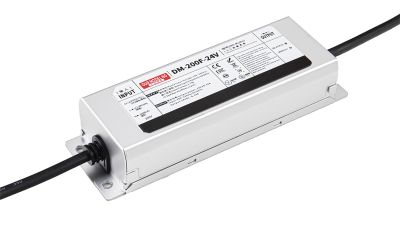
Exploring the Efficiency and Reliability of 12V 16.7A 200W IP67 Outdoor Waterproof Power Supplies in Modern Applications
In modern applications, the efficiency and reliability of power supplies are paramount, especially when it comes to outdoor installations. The 12V 16.7A 200W waterproof power supplies are engineered to meet the demands of high-performance LED lighting systems. With a steady 12V DC output, they provide consistent power that is crucial for maintaining the brightness and effectiveness of LED fixtures, even in challenging environments.
With an IP67 rating, these power supplies are not only waterproof but also resistant to dust, making them ideal for both indoor and outdoor settings. This rugged construction ensures that they can withstand rain, humidity, and other environmental factors without compromising performance. Their compact aluminum housing design offers an advantage for projects with space constraints, allowing for seamless integration in various setups.
Furthermore, the advanced safety features of these power supplies enhance their reliability. Equipped with overvoltage, overload, short circuit, and overheating protections, they guarantee the safety and longevity of the connected LED systems. Operating over a wide AC input range of 200-240V adds to their versatility, ensuring compatibility with a variety of electrical systems. This makes the 12V 200W Waterproof Led Driver a trusted choice for professionals seeking efficient and durable lighting solutions in demanding applications.
FAQS
: The content aims to inform and educate readers. It provides specific insights and practical knowledge.
The information is generally updated regularly. However, some details may become outdated. Always check for the latest updates.
Yes, the content is organized for easy navigation. But some sections might require more thorough reading.
Visuals are often included to enhance understanding. Yet, not every point will have them, which can leave gaps.
The content targets a broad audience. However, some parts might be too complex for casual readers.
If you have questions, reach out for clarification. There may not always be immediate answers, but seeking help is encouraged.
Sharing is typically permitted with proper credit. But, always confirm the sharing guidelines first.
Examples are included to illustrate points. But sometimes, those examples may not resonate with every reader.
While the content is informative, use discretion for decisions. It's wise to seek additional viewpoints or expertise.
Reporting errors is appreciated, as it helps improve the content. However, correcting them immediately may not be feasible.
Conclusion
Choosing the right Power Supply is crucial for ensuring the stability and longevity of your computer system. This article begins by explaining the fundamentals of power supplies and differentiating between various types, like ATX and SFX, as well as their specific applications. Key specifications such as voltage, current, and wattage are detailed to help users make informed decisions based on their hardware requirements.
Additionally, assessing your power needs involves calculating the total wattage required for your components, while also considering compatibility with your motherboard and peripherals. Efficiency ratings like 80 PLUS are discussed, highlighting their importance for energy savings and performance. Finally, the article emphasizes future-proofing your Power Supply to accommodate potential upgrades, ensuring that your system remains robust and adaptable over time.