Choosing the right S-Shaped Led Strip in 2026 isn’t just about comparing brightness or price—there’s a lot more to think about. The U.S. Department of Energy points out that modern LED systems can save a ton of energy, which is kind of a big deal, especially since the International Energy Agency says lighting accounts for roughly 15% of all global electricity use. That’s pretty significant. Imagine installing a flexible strip around a curved counter, a retail display, or an architectural column—that kind of setup can last for thousands of hours. But if you pick the wrong one, you could end up with hotspots, visible dots, voltage drops, or even early failure. Not exactly ideal, right?
James Brodrick, who used to manage solid-state lighting at the Department of Energy, put it simply: “The lighting system is more than just the light source.” That’s a good reminder that every S-Shaped Led Strip project needs careful consideration. Things like bending direction, minimum bend radius, LED density, color rendering, voltage, thermal management, and whether your controllers are compatible all matter. If you’re working in a damp or humid area, don’t forget to check IP ratings—going with just a glossy product page won’t tell you everything.
Take a good look at your installation surface. Dust, sharp corners, and trapped heat can weaken the adhesive backing of the strip. Honestly, doing a quick sample test is smarter than just relying on photos. Measure the curve, check the distance for power, and look at the diffuser before you hit that buy button—that way, you avoid costly rework later. Trust me, it’s worth the extra time.
This guide touches on practical specs, how trustworthy suppliers are, and real-world installation stuff. It also pulls info from reputable sources like the U.S. Department of Energy, Energy Star, and the International Energy Agency. Keep in mind, though—some of this still requires your judgment. No one-size-fits-all S-Shaped Led Strip exists; the best pick balances visual flow, safety, durability, and how much it’ll cost you to run over the long haul.
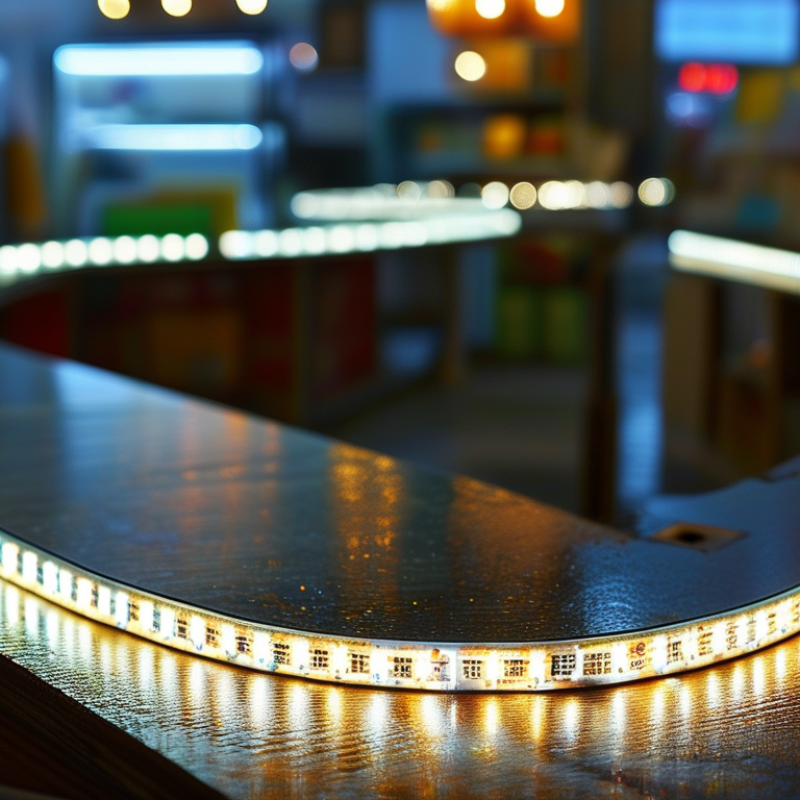
An S-shaped LED strip is a flexible lighting strip formed with repeating curves, rather than a straight line. Its silicone body or circuit board follows an alternating path. This design allows light to trace waves, rounded letters, spiral edges, and irregular architectural details. Some models bend in one direction, while others support more flexible side bending. Check the manufacturer’s bend-radius specification carefully. The phrase “S-shaped” is not always used consistently.
In practical installations, these strips work well for illuminated signage, display shelves, curved ceilings, retail counters, and decorative wall features. They can also outline mirrors, furniture edges, and exhibition structures. The curved profile reduces visible gaps around smooth contours. It does not solve every lighting problem. Tight corners may still create dark spots or stress the circuit. A small mock-up helps reveal these issues before full installation.
When choosing a suitable strip in 2026, examine LED density, color-rendering quality, voltage stability, heat control, and waterproof protection. Higher density usually creates smoother lines, especially when viewed through shallow channels. Use aluminum profiles where heat may build up. Confirm the strip’s cutting marks and connector compatibility. Adhesive backing alone may fail on dusty, curved, or warm surfaces. I once underestimated surface preparation; the first section slowly lifted. That mistake is easy to avoid, but often overlooked. Testing brightness at night is also wise, because daytime impressions can be misleading.
Choosing the best S-shaped Led Strip in 2026 requires more than checking brightness. Start with luminous efficacy, measured in lumens per watt. The U.S. Department of Energy’s Solid-State Lighting R&D Opportunities report identifies efficacy above 200 lm/W as a continuing development benchmark. For curved installations, compare actual output after bending, not only laboratory figures. Check color temperature, CRI, and TM-30 data. The International Commission on Illumination recommends broader color evaluation because CRI alone can hide weak red or saturated-color performance.
Voltage and heat matter just as much. A long S-shaped section can show visible brightness loss near its far end. Measure voltage at both ends during operation. A 24-volt design usually reduces current and may control voltage drop better than a 12-volt design. Also inspect wattage per meter, copper thickness, and the manufacturer’s recommended maximum run. Small details become obvious on a white wall.
Protection ratings should match the location. IEC 60529 IP ratings distinguish resistance to dust and water, but an IP rating does not guarantee strong thermal performance. Leave room behind the Led Strip for airflow, especially inside aluminum channels. LightingEurope’s market reports continue to show LED adoption dominating general lighting, yet efficiency figures vary widely between products. I have seen attractive samples heat quickly. That is a warning. Ask for flicker data, operating temperature, bend radius, and a real photometric test report before choosing.
Choosing the best Led S Strip starts with matching the LED type to the installation, not the shape alone. For flexible indoor use, SMD LEDs offer a practical balance between efficiency, cost, and smooth light coverage. COB strips usually create fewer visible dots, especially around curved shelves or display edges. The U.S. Department of Energy reports that advanced LED packages can exceed 200 lumens per watt in laboratory conditions, although complete products perform lower. Real-world testing matters more than a package claim.
Color selection changes how the space feels. A 2700K–3000K strip gives wood and fabric a warmer appearance, while 4000K–5000K looks cleaner for work areas. Choose a CRI of 90 or higher when accurate food, paint, or textile colors matter. The Illuminating Engineering Society links higher color fidelity with better visual evaluation, but comfort still depends on the room. I once selected a bright cool-white strip for a cabinet and found it harsh at night. That choice looked efficient on paper.
Brightness should be judged in lumens per meter, not watts alone. The DOE notes that LEDs can use at least 75% less energy than incandescent lighting, yet excessive output still creates glare. For accent lighting, 300–600 lumens per meter is often sufficient; task lighting may need 800–1500. Add a dimmer and test the strip at eye level. Check the actual viewing angle, heat dissipation, voltage drop, and IP rating before cutting. Curves expose weak solder joints quickly. My own measurements are never perfectly consistent, so I leave adjustment room rather than trusting one estimate.
| Selection Dimension | Recommended Option | Typical Specification | Best Use | Important Buying Check |
|---|---|---|---|---|
| LED Type | COB LED strip | Continuous light line with a typical density of about 480–1,200 LED chips per metre | Smooth S curves, lettering, signage, shelves, and decorative outlines | Confirm the strip is designed for lateral or side-to-side bending; standard strips may not bend in every direction |
| Alternative LED Type | SMD LED strip with flexible PCB | Common packages include 2835, 3528, and 5050; visible light points may appear at lower densities | Budget projects, accent lighting, and applications where dot-free light is not essential | Check LED spacing, PCB width, bend direction, and minimum bend radius |
| Light Color | 3000–4000 K white | 3000 K produces warm white; 4000 K produces neutral white | Homes, hospitality areas, retail displays, and general decorative lighting | Choose 2700–3000 K for a warmer atmosphere and 4000–5000 K for a cleaner, more task-oriented appearance |
| Color Rendering | CRI 90 or higher | High color-rendering performance for more natural-looking colors | Retail displays, kitchens, artwork, hospitality, and photography areas | Ask for the tested CRI value and, where relevant, the R9 value for stronger red reproduction |
| Brightness: Ambient | 300–600 lumens per metre | Low-to-medium output, depending on LED density and power consumption | Night lighting, coves, cabinets, bedrooms, and decorative curves | Use a dimmer if the strip may be viewed directly or used at night |
| Brightness: Task or Display | 800–1,500 lumens per metre | Medium-to-high output; higher output generally creates more heat | Retail shelving, work surfaces, commercial displays, and prominent signage | Provide an aluminium profile or other suitable heat-spreading surface when recommended by the manufacturer |
| Voltage | 24 V DC | Lower voltage drop than 12 V over comparable lengths; requires a compatible constant-voltage Power Supply | Medium and long installations with more consistent brightness | Do not connect a 24 V strip to a 12 V supply or a 12 V strip to a 24 V supply |
| Cutting Length | Short cut intervals | Common cut points range from about 25 mm to 100 mm, depending on voltage and circuit design | Custom S shapes, tight layouts, and made-to-measure installations | Cut only at marked cut lines and verify the required segment length before installation |
| Water Resistance | IP20 for dry interiors; IP65 or higher for moisture exposure | IP20 has no water protection; IP65 typically protects against water jets when correctly sealed | Indoor rooms, covered outdoor areas, bathrooms, and protected signage | IP rating alone does not guarantee suitability for immersion, pools, or permanently exposed outdoor locations |
| Bending Requirement | Side-bending design with a stated minimum radius | Many flexible strips require a bend radius of approximately 30–100 mm; the exact value varies by construction | Tight curves, wave patterns, logos, and S shaped contours | Never fold, twist, or bend beyond the specified radius because the PCB and solder joints can be damaged |
| Power Planning | Power supply rated at least 20% above calculated load | Required wattage = strip watts per metre × installed metres; add a safety margin | All installations, especially long or high-output runs | Use the correct DC output voltage and allow ventilation around the power supply |
| Control Method | PWM dimmer or compatible smart controller | Single-color strips need a single-channel controller; RGB or tunable-white strips need compatible multi-channel control | Adjustable ambience, scheduled lighting, and dynamic decorative effects | Match the controller voltage, current rating, channel type, and connector layout to the strip |
Specifications vary by construction and installation method. Always verify the product datasheet for power consumption, cut interval, bend direction, minimum bend radius, operating temperature, and IP protection before purchase.
How to Choose the Best S Shaped LED Strip in 2026?
An S-shaped LED strip should be judged by movement, not appearance. Check whether it bends sideways, forward, or in both directions. These details determine whether it can follow a wave-shaped shelf or curved wall. Ask for the minimum bend radius. Do not force a sharp turn. In my own installation tests, repeated tight bending caused uneven light and stressed the copper paths. That result was easy to miss during a short showroom demonstration. Flexibility also depends on temperature, coating thickness, and the surface beneath the strip.
Cutting options deserve equal attention. Measure the design before cutting, then follow the printed cut marks. Cutting between marks can break the circuit or create a dark section. Confirm the cut interval, because some strips allow only short increments. Verify the datasheet before choosing a sealed model for humid areas. After cutting, exposed ends need suitable sealing. Never rely on adhesive alone when the surface is dusty, textured, or warm. Clean the surface, test the full length, and add clips around curves. Use a compatible low-voltage driver, and check voltage drop on longer runs. Brightness may fade near the far end. That is a common oversight.
Tips: Buy a small sample before ordering a full length. Bend it around the real corner, test every planned cut, and inspect light uniformity. For ceilings or frequently touched surfaces, mounting clips usually provide more reliable support than adhesive alone. Record the driver location and cable route. I still recheck measurements before cutting. Small errors become expensive.
Choosing the best S shaped LED strip in 2026 starts with power, not color. A 24-volt system usually reduces voltage loss across longer decorative runs. Check the strip’s watts per meter, then multiply by its installed length. Add at least 20% capacity to the power supply. Do not trust a rounded estimate. Curves and connectors can increase the actual load.
The U.S. Department of Energy’s 2023 Solid-State Lighting R&D Opportunities report identifies efficacy above 200 lumens per watt as a future development target. That figure is not a guaranteed rating for flexible products. Compare delivered lumens, watts, heat, and warranty terms instead. For an S-shaped Neon Led Strip, choose a PWM dimmer that matches the strip’s voltage and current. Addressable control offers animated effects, but it adds wiring and programming points that can fail. Keep control cables short where possible.
Safety deserves equal attention. Select a power supply with recognized electrical safety certification, overload protection, and adequate ventilation. Install a fuse near the supply when the system design requires one. An IP65 rating may resist water spray, but it does not make every connector waterproof. Follow the manufacturer’s bend radius; sharp folds can damage copper traces invisibly. I have seen bright installations fail because the adhesive softened against warm surfaces. Aluminum mounting channels improve heat transfer and alignment. Still, thermal testing on the actual curve is wiser than assuming the channel solves everything.
Which power, control, and safety features matter most?
This comparison uses a 5-meter strip rated at 14.4 watts per meter, producing a calculated total load of 72 watts. A 24V version draws approximately half the current of a comparable 12V version, which generally helps reduce cable losses on longer installations. For control, choose a compatible PWM dimmer or addressable controller with adequate current capacity. For safety, use a correctly sized fuse, aluminum heat dissipation, suitable IP protection for the installation location, and a power supply with at least 20% spare capacity.
Choosing an S shaped LED strip in 2026 requires more than comparing brightness.
The curves look attractive, but tight bends can stress copper traces and weaken solder joints. During installation, I check the minimum bend radius and press the strip onto a clean, dry surface. Never fold it sharply. Durability depends on copper thickness, LED spacing, heat control, and moisture protection. For kitchens or covered patios, an appropriate IP rating matters more than decorative packaging. An exposed strip near steam may fail early, even when its LEDs remain bright.
Compatibility should be verified before cutting.
Match the strip voltage with the power supply, then confirm the controller supports the required current. A 2835 Led Strip may offer efficient illumination, but its connector width and cut intervals still need checking. Measure twice. On a curved cabinet, I test one short section before committing to the full layout. Check dimming behavior, color temperature, and connector polarity under real conditions. Some installations flicker because the cable is too thin, not because the strip is defective.
Cost should include more than the roll price.
The cheapest option can become expensive after replacing failed sections or buying new connectors. I compare price per usable meter, power consumption, included accessories, and expected service life. Warranty terms deserve equal attention. Look for coverage length, proof requirements, installation exclusions, and a reachable service channel. A longer warranty helps only when voltage limits and installation conditions are clearly documented. I have trusted attractive specifications too quickly before. That mistake made the next comparison more careful.
: It is a flexible lighting strip with repeating curves. It follows waves, rounded letters, spiral edges, and irregular contours.
They suit curved ceilings, display shelves, retail counters, mirrors, and decorative walls. They can also outline furniture and exhibition structures.
Usually, no. Check the minimum bend radius before installation. Sharp turns may create dark spots or damage copper paths. Do not force it.
Buy a small sample and bend it around the actual corner. Test brightness, planned cuts, connectors, and light uniformity. A showroom test may mislead you.
Measure the design carefully and cut only at marked points. Check the cutting interval in the technical sheet. Cutting elsewhere may create a dark section.
Clean dust, grease, and moisture from the surface. Use mounting clips around curves and warm areas. Adhesive alone may slowly lift.
A 24-volt system often reduces voltage loss across longer runs. Calculate watts per meter times the installed length. Add at least 20% capacity.
Choose certified low-voltage equipment with overload protection and ventilation. Use aluminum channels where heat may build up. Water resistance does not make every connector waterproof. Test the real installation.
Choosing the best S-Shaped Led Strip in 2026 requires more than comparing appearance and price. First, consider how its curved design fits your intended application, such as decorative edges, signs, furniture, displays, or architectural features. Compare LED type, color temperature, brightness, color consistency, strip density, and dimming performance to achieve the desired visual effect. Flexibility is also essential, so check the minimum bending radius, cutting marks, connection options, and whether installation requires channels, clips, or adhesive backing.
A reliable selection should also include suitable power requirements, efficient heat management, compatible controllers, and appropriate safety certifications. Evaluate protection against moisture, dust, and mechanical wear according to the installation environment. Finally, compare compatibility with your existing power and control systems, total operating cost, energy efficiency, expected lifespan, and warranty coverage. By balancing performance, installation convenience, durability, and long-term value, you can choose an S-Shaped Led Strip that delivers consistent lighting and dependable service.