Picking out the right Injection LED Module is super important if you want your lighting to really hit the mark. Have you heard that the International Energy Agency recently said that by 2030, LED lights could make up about 60% of all the lighting we use worldwide? Crazy, right? It’s a huge shift that means big opportunities—and a few challenges too—for folks like us trying to keep up.
Getting to know the ins and outs of different Injection Led Modules is pretty much essential. They come in all sorts of options—different brightness levels, color temperatures, and how much energy they chew up. According to MarketsandMarkets, the global LED module market could hit around $70 billion by 2025. That’s a lot of zeros, and it just goes to show how important it is to make smart choices when you're picking one.
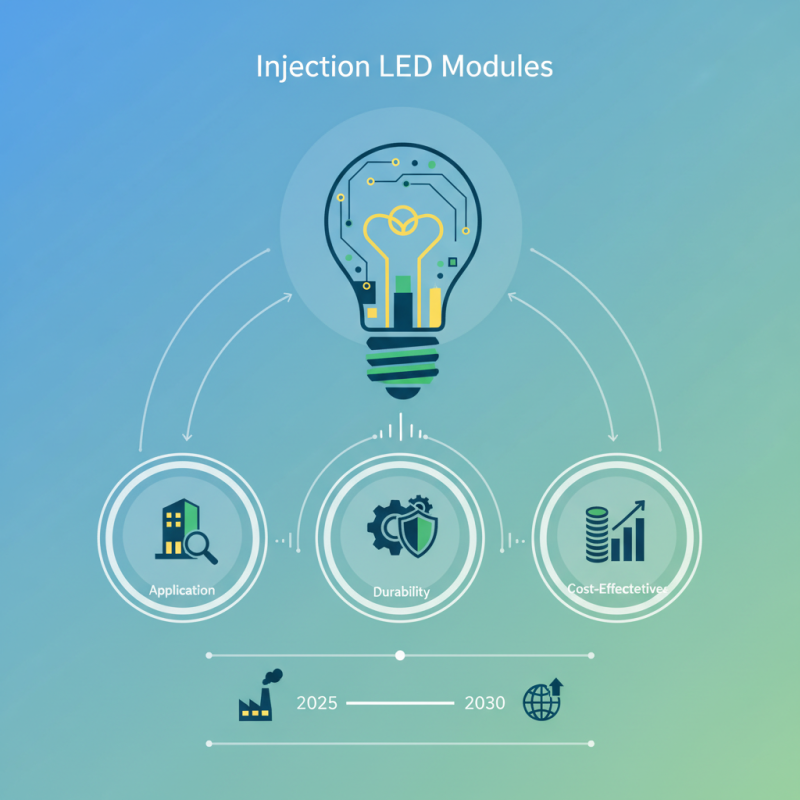
Now, even though LED tech offers loads of advantages, not every Injection LED Module is made the same. You really wanna look at stuff like what you’re using it for, how long it’ll last, and whether it makes sense for your budget. Sometimes, people overlook these details, which can lead to less-than-great results. Taking the time to consider these factors can totally boost your satisfaction and help you get the best bang for your buck.
Understanding Injection Led Modules: An Overview
Injection Led Modules are increasingly popular in various lighting applications. These modules offer high efficiency and consistent performance. Understanding their features is essential before making a choice.
Injection LED modules provide uniform light output. They can be used in different settings, from commercial spaces to automotive lighting. Each module varies in brightness, color temperature, and power consumption. Therefore, it’s crucial to evaluate your needs. Consider the environment where you want to install the modules. Ambient conditions can affect the performance of LED modules.
Pay attention to the lumen output. A higher lumen count often means brighter light, but it isn't always necessary. Sometimes, a lower output can enhance ambiance without overwhelming brightness. Look for reliable specifications to avoid unexpected issues. Investing time in research will ensure you select modules that truly meet your requirements. Trust reliable sources for guidance. Understanding these details can help you refine your options for LED modules.
Identifying Your Specific Lighting Needs and Applications
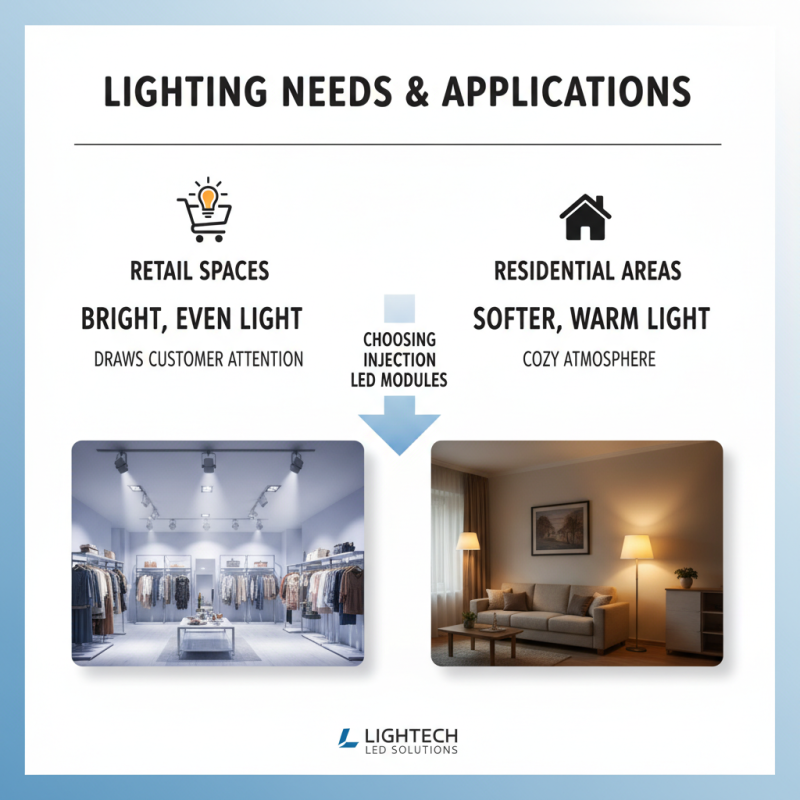
Identifying your specific lighting needs is crucial to selecting the right injection LED module. Different applications require different lighting characteristics. For instance, retail spaces benefit from bright, even light that draws customer attention. In contrast, residential areas may require softer light for a cozy atmosphere.
Tips: Consider the color temperature of the light. Warmer tones can enhance comfort, while cooler tones may be preferable for work environments. Assess the lumen output to ensure sufficient brightness for your needs.
Always think about the physical installation too. Will the module fit in your intended space? Larger modules may not suit tighter areas. In some cases, a more compact design might be more practical.
Tips: Check the beam angle for directional lighting effects. A narrow beam can highlight specific features, while a wider angle might spread light broadly.
Reflect on the energy efficiency of the module. High-efficiency LEDs save on power, but upfront costs can be higher. Measuring the long-term benefits against initial expenses is vital. Balancing performance and budget ensures you make the best decision for your lighting needs.
Key Features to Consider When Selecting Injection Led Modules
When selecting injection LED modules, consider several key features. One important factor is brightness. You need to assess lumens per watt and the desired brightness level for your specific application. For instance, high brightness is essential for outdoor signage, while softer light serves well in indoor spaces.
Another crucial feature is color temperature. LED modules come in a range of temperatures, from warm white to cool daylight. Depending on your needs, these can convey different atmospheres or enhance product displays. Furthermore, look into energy efficiency. A good Led 3 Module should not only be bright but also consume less energy.
Don’t overlook the module's durability. The lifespan of LED modules can vary vastly. Some may not endure extreme weather conditions, while others could offer long-term reliability. Consider installation and maintenance requirements too. A complicated setup can lead to increased costs over time. These factors will help in making a knowledgeable choice based on your specific needs.
Evaluating the Performance and Efficiency of Different Modules
When selecting an injection LED module, evaluating performance and efficiency is crucial. Consider brightness levels, power consumption, and heat generation. A bright LED may seem advantageous, but high power usage can increase operational costs. Balance between brightness and efficiency is key.
Thermal management is often overlooked. LEDs generate heat, which can impact their lifespan and efficiency. Modules with better heat dissipation technologies tend to perform more consistently. Don't choose a module solely based on the advertised lumens; examine how heat affects longevity.
Accessibility of replacements and support is vital. Some modules are more common and easier to source than others. This availability can significantly impact maintenance and upgrades. Reflection on how long you plan to use the module is essential. Consider ease of access for repairs or replacements when choosing the right option.
Comparing Different Brands and Models of Injection Led Modules
When selecting an injection LED module, various factors become crucial. Different brands offer unique features tailored to specific needs. Some modules focus on energy efficiency, while others emphasize brightness and color accuracy. It's essential to research each brand's reputation and user reviews. This helps in assessing their reliability and performance claims.
A key consideration is the Power Supply. For example, a12v Led Module may suit environments requiring consistent voltage. Voltage fluctuations can impact performance significantly. Users often overlook this detail. It’s worth pondering: what happens when you choose the wrong module for your application? Compatibility and longevity can suffer due to mismatched specifications.
Another vital aspect is installation and maintenance. Some models are user-friendly, while others may require professional installation. Identifying your comfort level with DIY projects will guide your choice. It’s also essential to think about potential maintenance challenges. Reflect on previous experiences with LED modules. Did you face issues that could have been avoided? Learning from past mistakes can lead to a more satisfactory choice this time around.
Budget Considerations for Your Injection Led Module Purchase
When considering an injection LED module, budget plays a crucial role. The initial price can vary significantly among different modules. It’s essential to assess what features you truly need versus what you can compromise on. Often, higher-priced modules come with advanced options, such as better brightness or longer lifespan. But, think carefully about how essential these features are for your project.
Many often overlook additional costs. Installation and maintenance fees can add up. If a module requires specialized tools or skills, the budget can stretch further. Additionally, consider energy consumption. A higher initial cost might lead to savings over time through lower energy bills. Always seek products with a clear understanding of their long-term value.
Evaluate the warranty and customer support as well. This can prevent unexpected expenses in the future. A cheaper module may seem attractive but could cost more in repairs or replacements. Reflecting on these factors will help make a more informed decision about what fits your financial plan. Your choice should balance cost with performance to meet your needs effectively.
Installation and Maintenance Tips for Injection Led Modules
When installing injection LED modules, it's essential to consider the environment. Ensure the space is clean and dry. Dust and moisture can impact performance. Check that the surface can handle the module's weight and heat. Proper mounting is crucial; an uneven surface can lead to flickering or failure.
Maintenance is another key aspect. Regular inspections help in identifying issues early. Look for signs of wear, such as discoloration or dimming. Clean the modules gently with a soft cloth to remove dust. Additionally, monitor connections for corrosion. Replace damaged cables promptly. Failure to maintain can lead to unexpected outages.
Remember, not all installations are perfect. Some might face unforeseen challenges, like power surges affecting the Led Module 12v. It's wise to use surge protectors for added safety. Document the installation process for future reference. This can help troubleshoot any problems later. Some users overlook this, leading to more complex fixes down the line.
Exploring the Impact of Bright 12V LED Modules on Signage Innovation: Insights from the 2023 Lighting Market Report
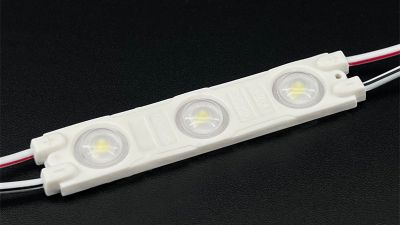
The 2023 Lighting Market Report sheds light on how bright 12V LED modules are revolutionizing signage innovation. A prime example of this technology is a specially designed module that employs three efficient SMD 2835 LEDs. With a remarkable luminous flux of 130 lumens achieved from a mere 1.2W, it is a powerful solution for illuminating channel letters and lightboxes. This high efficiency makes it an attractive option for businesses seeking bright and energy-saving lighting solutions.
In addition to its luminous performance, durability is a key feature of this module. Its injection-molded construction provides IP65 waterproof protection, ensuring that it can withstand dust and water exposure without compromising performance. Ideal for both indoor and protected outdoor applications, this module operates on safe DC 12V, boasting a lifespan of up to 50,000 hours. Furthermore, the module offers a good Color Rendering Index (CRI) of 80, making it an excellent choice for enhancing visual appeal in signage.
Available in a wide range of color temperatures and hues, including Cool White, Warm White, Red, Green, and Blue, this module caters to diverse project needs. Its compact size of 61x13mm makes it easy to integrate into various designs, and with the option to purchase in sets of 20, it streamlines the installation process. These features position the 12V LED module as a vital component in the evolution of modern signage, highlighting its potential for impactful visual communication.
FAQS
: Assess your application. Retail spaces need bright light, while homes benefit from softer lighting for comfort.
Warmer tones enhance comfort. Cooler tones are often better for work environments.
Ensuring the lumen output is sufficient guarantees brightness for your space.
Ensure the module fits your space. Larger modules may not suit tight areas well.
A narrow beam highlights features, while a wider angle spreads light broadly for general illumination.
High-efficiency LEDs save power, but initial costs can be higher. Consider long-term benefits versus costs.
Better heat dissipation leads to consistent performance and longer lifespan. Don’t overlook this aspect.
Some modules are easier to replace than others. Think about long-term maintenance when choosing.
Each brand has unique features. User reviews can help assess their reliability and performance.
Reflect on previous issues. Learning from past mistakes can guide you to a better decision this time.
Conclusion
When selecting the right Injection Led Module for your specific needs, it is crucial to start by understanding the basics of these lighting components, including their various applications. Assess your unique lighting requirements, as this will determine the type of injection module most suitable for your project. Key features to consider include brightness, color temperature, and energy efficiency, all of which significantly impact performance and outcome.
Furthermore, evaluating different modules on the market requires comparing their specification sheets and performance reviews to make an informed decision. Budget considerations are also essential, as they affect not only the upfront costs but also long-term energy savings and maintenance expenses. Lastly, ensuring proper installation and ongoing maintenance of your Injection Led Module will enhance its lifespan and effectiveness, making it a valuable investment for your lighting needs.