In the fast-growing world of LED lighting, knowing how important it is to pick the right Power Supply for your LED strips really can't be overstated. I recently came across a report from Lighting Industry Insights, and it mentioned that demand for top-notch power supplies is expected to jump by about 15% every year. As tech keeps advancing, especially with AI helping to boost efficiency, both manufacturers and folks like us are finding it easier to navigate this market. But honestly, a lot of people still overlook how crucial it is to match their LED strips with the proper power supply.
Dr. Emily Sanders, a well-respected expert in the field, points out that "choosing the right power supply isn’t just about making things work; it’s about ensuring your LED setup lasts longer and runs smoother." When a power supply doesn’t give a steady voltage, you might get flickering lights or your LED strips might burn out sooner than they should. On the flip side, good quality power supplies stabilize performance and actually help save energy overall.
It’s easy to get overwhelmed by all those specifications and prices, right? I get it—things can seem complicated at first. But remembering the basics—like making sure the power supply has enough capacity and proper certification—can make a huge difference. Honestly, focusing on quality over just spending less will pay off in the long run, making sure your LED setup stays bright and reliable for years to come. Getting that perfect match between your LED strips and their power supplies? Well, that can really be the game-changer.

Understanding LED Strips and Their Power Requirements
LED strips have gained popularity for their versatility and aesthetic appeal. However, understanding their power requirements is crucial for optimal performance. According to industry experts, a typical LED strip consumes around 0.24 watts per LED. With strips containing 60 LEDs per meter, this totals to approximately 14.4 watts per meter. Misjudging these figures can lead to underpowered setups, hindering brightness and color accuracy.
Power supplies play a critical role in the functionality of LED strips. Overloading a power supply can cause overheating and premature failure. Reports indicate that at least a 20% buffer is needed for reliability. For instance, if you use 10 meters of LED strip, the total consumption is approximately 144 watts. Therefore, a power supply rated around 180 watts is advisable. It's important to invest in a high-quality unit to avoid common pitfalls. In an industry where quality control is paramount, some products still fail to meet necessary safety standards.
Wiring and voltage drop are also significant factors. Long runs of LED strips may suffer from diminished brightness at the ends. To combat this, it's recommended to power long strips from both ends. This simple adjustment can make a noticeable difference. As these details emphasize, understanding the nuances of power requirements is essential for creating an effective LED lighting setup. Mistakes in these areas could lead to frustrations and inefficiencies.
Types of Power Supplies Suitable for LED Strips
When selecting a power supply for LED strips, understanding the types available is crucial. LED strips usually require a constant voltage, making regulated power supplies ideal. These often come in 5V, 12V, or 24V options. According to industry reports, a well-matched power supply enhances LED lifespan significantly, allowing for safer operations.
Switching power supplies are a popular choice. They convert high voltage AC to low voltage DC efficiently, minimizing energy waste. Data suggests over 80% efficiency in many models, leading to lower energy bills. However, consumers must consider that not all switching supplies are reliable. The quality can vary, impacting performance.
Meanwell and similar manufacturers claim their supplies can handle surges. Yet, problems arise if the voltage fluctuates. Use a power supply that matches your LED strip configuration closely to prevent issues. It is not uncommon for users to overlook these details, leading to potential failures. Always check specifications thoroughly. Proper research can avoid unfortunate blunders.
Key Features to Look for in a Quality Power Supply
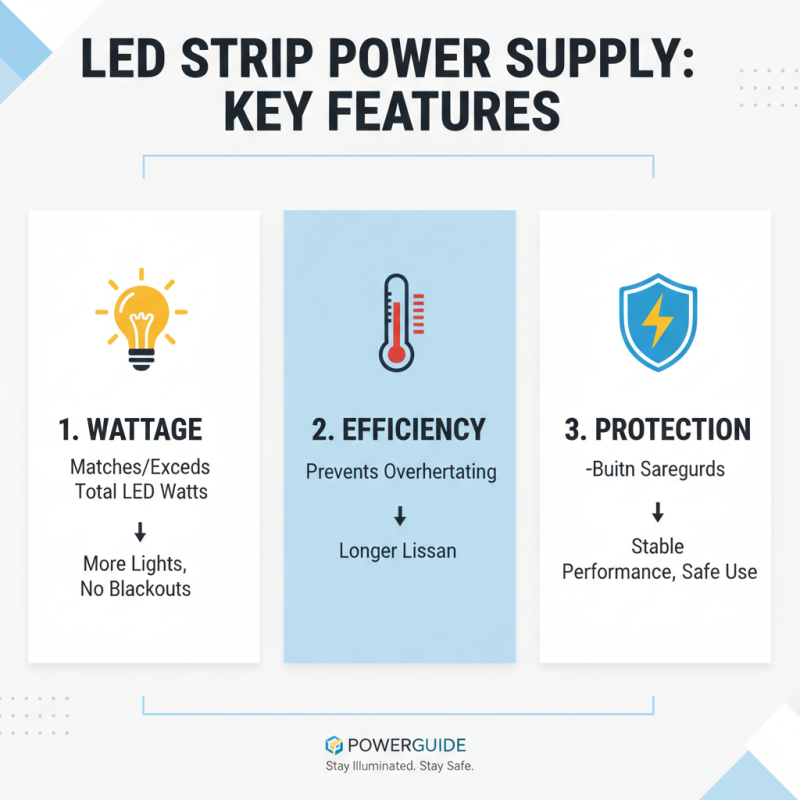
When choosing a power supply for LED strips, certain features stand out. First, consider the wattage. It determines how many lights you can connect. A lower wattage might leave you in the dark. Look for a power supply that exceeds the total wattage of your LED strips. This prevents overheating and prolongs lifespan.
Voltage is another critical factor. Most LED strips operate at 12V or 24V. Check the specifications of your LEDs before purchasing. You want a power supply that matches this voltage. An incompatible voltage can damage your lights. Additionally, ensure the power supply has good thermal protection. This feature prevents overheating and enhances safety.
Lastly, noise levels matter. Some power supplies emit a hum when operating. Choose one that's quiet if you're sensitive to sound. Quality components lead to lower noise and better longevity. After all, spending a bit more for quality can save you headaches later.
Determining the Right Wattage for Your LED Setup
When setting up LED strips, the right wattage is crucial. Each LED strip requires a specific amount of power to function effectively. If you underpower it, the lights may flicker or dim. On the other hand, an excessively powerful supply can lead to overheating. To find the correct wattage, check the specifications of your LED strips.
Typically, LED strips have a wattage rating per meter. For example, a strip that consumes 5 watts per meter will need a supply that can handle the total length. If your setup includes ten meters, you need a 50-watt power supply. Always add a buffer, around 20%, to ensure consistent performance.
Make sure to account for all your strips and connectors. Miscalculating can result in poor lighting quality or even damage. It’s helpful to draw out your configuration on paper. This way, you can visualize the total wattage needed. Choosing the right Power Supply For Led Strip can seem intimidating, but attention to detail will lead you to a successful setup.
Best High-Quality Power Supply for LED Strip That You Need to Know?
| LED Strip Type | Voltage (V) | Wattage (W) | Recommended Power Supply (W) | Efficiency Rating |
| 5050 RGB LED Strip | 12 | 60 | 75 | 80% |
| 3528 LED Strip | 12 | 24 | 30 | 85% |
| 5630 LED Strip | 12 | 72 | 90 | 82% |
| RGBW LED Strip | 12 | 96 | 120 | 80% |
| 220V LED Strip | 220 | 120 | 150 | 90% |
Safety Standards and Certifications for Power Supplies
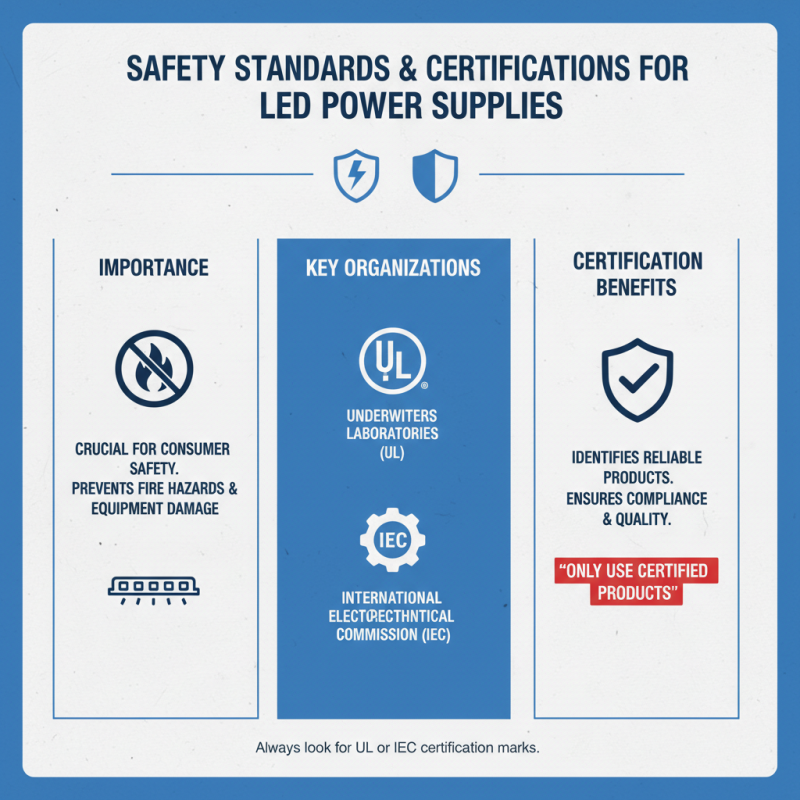
When choosing a power supply for LED strips, safety standards are crucial. Various organizations set guidelines to ensure the products are safe for consumers. The Underwriters Laboratories (UL) and the International Electrotechnical Commission (IEC) provide certifications to help identify reliable power supplies. Only products meeting these standards should be considered. Failure to adhere to safety regulations can lead to fire hazards or equipment damage.
Many consumers overlook the wattage requirements for their Linear LED Strip Power. It is critical to select a power supply that exceeds your LED strip's total wattage. For example, if your strips require 30 watts, a 40-watt power supply will ensure they operate efficiently without overheating. A report from the Lighting Research Center indicates that underpowered supplies can lead to shorter lifespans for LED strips.
Tips: Always check for certifications. Look for UL, CE, or FCC marks on the power supply. These labels can save you from potential risks. Consider having a surge protector in your setup. This adds another layer of security for your lighting system. Most importantly, never ignore unusual terms or specifications. If something seems off, investigate further.
Common Brands and Models of High-Quality Power Supplies
When choosing a high-quality power supply for Led Strips, it's vital to consider several common brands and models. Many people opt for units that promise reliability and consistent voltage output. They often look for models equipped with overcurrent and short-circuit protection. These features ensure that your LED strips function safely and efficiently.
You will find a range of options. Some brands provide compact power supplies that easily fit into tight spaces. Others focus on high wattage, useful for larger LED strip installations. It's crucial to evaluate the wattage capacity needed for your setup. Many users tend to underestimate this requirement, leading to dim or flickering lights.
Taking the time to read product reviews can help clarify your choices. Many models come with warranties, which is a reassuring factor. However, some units may fail sooner than expected under intense use. Checking customer feedback helps identify quality issues. Investing time in research can prevent future regrets when your LED strips are not performing as intended.
Installation Tips for LED Strip Power Supplies
When installing power supplies for Led S Strips, attention to detail is crucial. First, choose the right wattage for your Led S Strip length.An underpowered supply can lead to flickering or dim lights. Ensure you measure the total wattage required. It’s better to have a power supply with extra capacity. This allows for future expansions or inefficient usage.
Wiring connections matter too. Use quality connectors to avoid short circuits. Sometimes, a simple mistake in wiring can cause major issues. Test your connections before powering everything.
Heat is another concern; ensure proper ventilation for your power supply. Overheating can lead to performance problems. If your setup gets too warm, consider adding cooling solutions.
Additionally, it’s useful to select a power supply with adjustable output voltage. This feature offers flexibility when trying different LED S strip configurations. Always follow safety guidelines during installation. An oversight here can result in equipment damage or hazards. Regularly check your system for any signs of wear or unusual behavior. This will help keep your LED lighting project running smoothly.
Optimizing Event Displays: A Comprehensive Guide to the Slim 200W 5V LED Display PSU for Rental & Door Head Screens
When it comes to powering LED displays, the Slim 200W 5V LED Display PSU stands out as an economical and efficient choice. Designed specifically for a variety of display types, including outdoor door head screens, scrolling text displays, and rental screens, this power supply is particularly optimized for P10 and P8 LED modules. With a robust 40A output, it ensures reliable performance whether in monochrome or full-color applications, making it versatile for different use cases.
One of the key features of this power supply is its ultra-thin design, which allows for seamless integration within the tight spaces of display cabinets. Enhanced by synchronous rectification technology, the Slim 200W PSU achieves an impressive efficiency of up to 93%, significantly reducing energy waste and heat production. Additionally, it comes equipped with various protection features, such as overload, over-voltage, and over-current safeguards, along with intelligent temperature control. Its fanless operation guarantees a silent performance, which is essential in environments where noise levels must be minimized.
Overall, the Slim 200W 5V LED Display PSU presents a practical solution for those looking to power their LED displays efficiently and affordably. Its combination of superior efficiency, compact design, and advanced protection makes it a preferred choice for projects requiring reliable power sources in display technology.
FAQS
: LED strips usually need a constant voltage power supply, commonly available in 5V, 12V, or 24V options.
They convert high voltage AC to low voltage DC efficiently, minimizing energy waste and often achieving over 80% efficiency.
Look at the wattage and ensure it exceeds the total wattage of your LED strips to avoid running out of light.
An incompatible voltage can damage your LED lights, leading to malfunctions and potentially short lifespans.
Thermal protection prevents overheating, enhancing safety and prolonging the lifespan of both the power supply and the LED strips.
Yes, noise levels matter. If you are sensitive to sound, choose a power supply that operates quietly for a better experience.
Research the manufacturer's specifications thoroughly. Not all suppliers offer reliable equipment, and oversight can lead to failures.
Overlooking details can lead to compatibility issues, potential failures, and unexpected costs, which many consumers experience frequently.
Conclusion
When choosing a power supply for LED strip installations, it is crucial to understand the specific power requirements of the LED strips you plan to use. Different types of power supplies are available, such as constant voltage and constant current options, which cater to various LED configurations. Key features to consider include efficiency ratings, voltage compatibility, and safety certifications, ensuring a reliable and safe power supply for LED strips.
To determine the right wattage for your setup, calculate the total power needed based on the length and type of the LED strip. It is essential to choose a power supply that exceeds this requirement to prevent overheating and ensure longevity. Additionally, installation tips, such as proper wiring and positioning of the power supply, can enhance performance. By following these guidelines, you can select a high-quality power supply for LED strips that meets your lighting needs effectively.